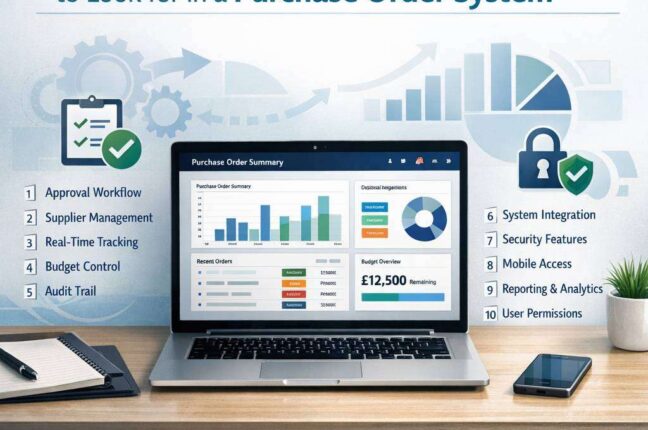
In the modern procurement landscape, organisations rely on streamlined processes to control costs, improve supplier relationships, and ensure timely deliveries. A robust po system software can transform procurement from a series of manual tasks into a coordinated, data-driven workflow. This blog explores the ten essential features to consider when evaluating digital purchase order software, online purchase orders, and related purchase ordering systems. By focusing on these capabilities, organisations can select a solution that not only meets current needs but also scales with growth, compliance demands, and evolving supplier ecosystems.
FAQ: Purchase Order Systems
What is a purchase order system?
A purchase order system is a tool or software solution that manages the end-to-end process of creating, approving, issuing, tracking, and reconciling purchase orders (POs) within an organisation. It helps automate procurement workflows, enforce controls, and improve spend visibility.
Why should my business implement a purchase order system?
- Streamlines procurement processes and reduces manual work
- Improves spend control and budget adherence
- Increases accuracy of orders and invoicing
- Enhances supplier collaboration and communication
- Provides audit trails for compliance and reporting
What are the key features to look for in a purchase order system?
- PO creation and customisation (templates, line items, quantities, pricing)
- Electronic approvals and routing workflows
- Supplier management and onboarding
- PO tracking and status updates
- Invoicing and three-way matching (PO, receipt, invoice)
- Budget checks and alerts
- Reporting and analytics
- Integration with ERP, accounting, and inventory systems
- Mobile access and user permissions
How does a purchase order system integrate with my existing ERP or accounting software?
Most PO systems offer integrations via APIs, middleware, or built-in connectors. They synchronise PO data, supplier details, receiving, and invoices with your ERP or accounting platform to ensure data consistency and reduce manual entry.
What’s the difference between a purchase order system and procurement software?
A PO system focuses on the creation, approval, and tracking of purchase orders. Procurement software is broader, encompassing strategic sourcing, supplier management, contract management, spend analytics, and often including PO capabilities as part of a larger suite.
What are the benefits of cloud-based purchase order systems?
- Lower upfront hardware costs and easier maintenance
- Scalability to match business growth
- Regular automatic updates and security patches
- Remote access for dispersed teams
- Faster deployment and lower IT burden
How do I determine the right PO system for my business?
- Assess your procurement volume and complexity
- Evaluate integration needs with current systems
- Consider user roles, approval workflows, and security requirements
- Check for compliance features (audit trails, regulatory controls)
- Review total cost of ownership, including implementation and maintenance
- Request demos, trials, and reference checks
What is three-way matching and why is it important?
Three-way matching compares the PO, the receiving document (goods receipt), and the supplier invoice to ensure everything aligns before payment. It helps prevent overpaying, duplicate payments, and errors.
Can purchase order systems help with supplier management?
Yes. They often include supplier records, performance metrics, onboarding workflows, contract linkage, and communications tools to streamline supplier relationships.
How do I handle change orders or PO amendments?
Good PO systems support amendment workflows, versioning, and clear audit trails. Changes can require re-approval, renegotiated pricing, and updated receiving and invoicing data.
Is mobile access important for a PO system?
For many organisations, yes. Mobile access enables quick PO creation, approvals, and status checks on the go, speeding up the procurement cycle.
What about security and compliance?
Look for role-based access, dual controls for approvals, audit logs, data encryption, and compliance with relevant standards (e.g., SOC 2, ISO 27001). Ensure data backup and disaster recovery plans are in place.
How long does it take to implement a PO system?
Implementation time varies by scope, from a few weeks for a basic setup to several months for complex, enterprise-wide deployments. Planning, data migration, and user training are key phases.
What is the typical ROI of adopting a purchase order system?
ROI comes from reduced manual work, fewer errors, better supplier terms, improved compliance, and faster purchasing cycles. Many organisations see payback within months, depending on volume and scope.
Do purchase order systems support multiple currencies and international suppliers?
Many enterprise solutions offer multi-currency support, tax handling, and international supplier management. Confirm currency, tax rules, and localisation needs with vendors.
How can I measure success after implementation?
- Time-to-fulfill purchase orders
- PO cycle time and approval bottlenecks
- maverick spend reduction
- invoice accuracy and days payable outstanding (DPO)
- compliance and audit findings
- supplier performance and delivery reliability
What are common implementation pitfalls to avoid?
- Inadequate data cleansing and master data quality
- Overly complex workflows that slow users down
- Insufficient stakeholder buy-in and training
- Poor change management and communication
- Skimping on testing and user acceptance
Do you offer a trial or demo of a purchase order system?
Many vendors provide demos or trial periods. It’s a good idea to test key workflows, integrations, and reporting with real data before purchasing.
A robust purchase order systems approach streamlines procurement, boosts spending oversight, and accelerates approvals. Businesses seeking efficiency should explore features like centralized catalogs, real-time approvals, and audit trails. For deeper insights, visit https://planergy.com/blog/purpose-purchase-order-system/ to understand essentials and best practices. Implementing the right system reduces errors and drives strategic cost control.
Centralised purchase order creation and management
A fundamental requirement is the ability to create, amend, and track purchase orders from a single centralised hub. The ideal purchase ordering software offers templated PO creation, version control, editable fields for supplier details and item descriptions, and a clear audit trail. This reduces errors, speeds up processing, and provides instant visibility across departments and suppliers. A well-designed po system software ensures every stakeholder can access up-to-date information, whether using traditional desktop interfaces or mobile environments.
Real-time approval workflows
An effective purchase order system enforces strong governance through configurable approval workflows. organisations should be able to route POs automatically to authorised approvers based on factors such as value, department, or project. Features to look for include multi-level routing, conditional approvals, parallel versus serial approvals, and the ability to set SLAs or escalation rules. Real-time status updates keep purchase orders moving quickly while maintaining control and compliance.
Purchase order systems streamline procurement by standardizing approvals, tracking spend, and improving supplier collaboration. Businesses gain visibility, reduce maverick purchases, and enforce policy compliance across teams. Efficient catalogs and automation save time, cut costs, and accelerate cycle times. https://www.cflowapps.com/purchase-order-system/
Seamless supplier collaboration and electronic invoicing
Digital purchase order software should enable seamless collaboration with suppliers. Key capabilities include electronic purchase orders that are delivered and acknowledged online, supplier portals for status updates and PO inquiries, and standardised electronic invoicing where supported. Integration with electronic data interchange (EDI) or modern API connections can further streamline supplier communications, reducing manual data entry and disputes while accelerating financial reconciliation.
Robust cost control and budget management
A strong po system software provides tools for budget checks, cost-centre allocation, and spend visibility. organisations benefit from preventive controls that stop POs from being issued if they exceed allocated budgets, along with predictive analytics that highlight unusual spend patterns. Comprehensive reporting should cover committed, incurred, and unapproved spend, enabling procurement teams to maintain financial discipline and support strategic sourcing decisions.
Efficient purchase order systems streamline procurement, reduce errors, and improve supplier relationships. By automating approval workflows, you gain real-time visibility into orders, inventory, and spend. These systems help finance teams close books faster and enable smarter budgeting. For businesses seeking scalable solutions, reliable purchase order systems can adapt to changing needs, from single-site operations to complex multi-location networks. Discover more about cloud-based options and benefits at https://cloudb2b.co.uk/. Invest in streamlined procurement today to boost profitability and compliance.
Comprehensive supplier management
Effective purchase order software includes a complete supplier management module. Features to prioritise include supplier onboarding, qualification checks, performance scoring, contract capture, and renewal reminders. A good system also supports supplier master data governance, ensuring consistent contact details, payment terms, and tax information. Strong supplier management reduces risk and strengthens negotiation leverage over time.
Inventory and demand integration
Purchase orders do not exist in isolation; they drive material movements and inventory levels. Look for a po system software that integrates with inventory management, warehouse management, or demand forecasting. Real-time stock visibility, auto-replenishment triggers, and lead-time calculations help ensure POs align with operational needs. This integration minimises stockouts and excess inventory, optimising cash flow and service levels.
Flexible PO formats and line-item detail
Every organisation has unique requirements for PO structure. The ideal purchase orders software supports custom fields, line-item detail, unit measures, tax handling, freight terms, and non-standard terms. The ability to attach quotes, specs, vendor certificates, or special instructions within the PO ensures clear communication and reduces back-and-forth with suppliers.
Strong security, auditability, and compliance
Security is non-negotiable in any po system software. Look for role-based access control, two-factor authentication options, data encryption at rest and in transit, and detailed audit logs. Compliance features should cover internal policies, regulatory requirements, and industry standards. Consider whether the system provides change tracking, approval histories, and exportable records for audit purposes.
Advanced reporting, analytics, and dashboards
Insightful analytics enable proactive procurement management. A top-tier purchase ordering system offers customisable dashboards, key performance indicators, and ad-hoc reporting. The ability to slice data by supplier, department, location, or project empowers teams to identify bottlenecks, measure supplier performance, and optimise working capital. Export options to common formats and the availability of scheduled reports add to operational efficiency.
Integrations and scalability
No system operates in a vacuum. The best online purchase orders solutions provide open APIs or pre-built connectors to ERP, finance, and HR systems, as well as popular accounting packages. Scalability is crucial; ensure the platform can accommodate growing purchase volumes, multiple currencies, and evolving procurement models such as outsourcing or decentralised procurement. A flexible architecture future-proofs investments and reduces the burden of migration when processes evolve.
A reliable purchase order systems approach can simplify procurement, reduce cycle times, and improve financial control across departments. By standardizing PO workflows, organizations gain better spend visibility, compliance, and supplier collaboration. When considering solutions, evaluate automation capabilities, integration with ERP, and user-friendly interfaces that drive adoption. For additional insights, explore best practices and industry benchmarks. https://www.corcentric.com/source-to-pay/ap-automation/electronic-purchase-orders/
Usability, adoption, and support
Finally, user experience determines long-term success. An intuitive interface, thoughtful navigation, and mobile accessibility drive user adoption and reduce training costs. Look for guided workflows, contextual help, and a robust knowledge base. Responsive customer support, regular product updates, and a clear product roadmap provide reassurance that the purchase ordering software will continue to meet changing business needs.
In summary, selecting the right purchase order system involves evaluating a blend of governance, collaboration, data integrity, and scalability. Whether you are implementing digital purchase order software for a mid-sized team or a full-scale po system software across multiple regions, prioritising these ten features will help you choose a solution that delivers efficiency, accuracy, and strategic value. When evaluating options, request demonstrations that showcase real-world scenarios, such as end-to-end PO approvals, supplier collaboration in action, and live reporting dashboards. By doing so, you’ll be well-positioned to realise the benefits of online purchase orders, streamlined purchase orders software, and a robust purchase ordering system that strengthens your organisation’s procurement capabilities.
About the author /
Sylvia Reid
