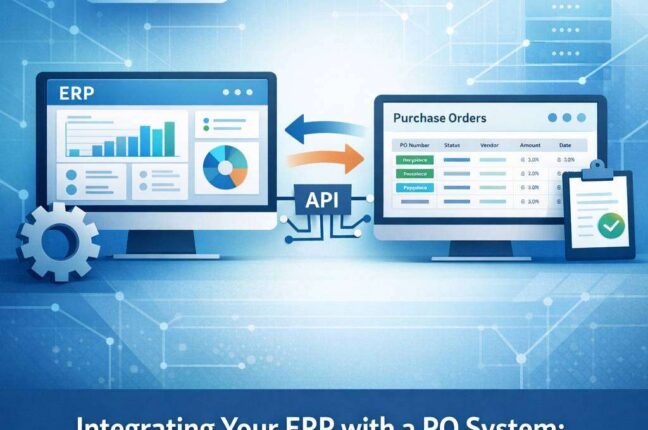
In today’s fast-paced business landscape, aligning your ERP (Enterprise Resource Planning) system with a robust purchase order (PO) process is not optional—it’s essential. When these systems work in harmony, you gain visibility, control, and efficiency across procurement, inventory, and accounting. This guest post shares practical considerations to help organisations choose and implement the right PO system software that complements your ERP and drives tangible value.
A well-integrated PO system software acts as the connective tissue between purchasing, supplier management, and financials. It reduces manual data entry, avoids duplicate records, and speeds up the end-to-end purchase cycle. For organisations exploring their options, the landscape includes cloud-based purchase order software, online purchase order systems, and more traditional on-premises solutions. The challenge is to select a solution that not only fits your current ERP but scales with your business needs.
Understanding the Value of Integration
Start with a clear map of your procurement workflow and where ERP data should flow. The key value drivers of integration include:
- Data consistency: A single source of truth for supplier details, pricing, and approvals.
- Process automation: Automatic generation of purchase orders from approved requisitions, advanced approvals, and real-time status updates.
- Financial accuracy: Real-time linkage to accounts payable, budgeting, and variance reporting.
- Spend visibility: Improved spend analytics and supplier performance insights.
Choosing a PO system software that can feed data into your ERP and pull category, vendor, and contract information back into the purchase order, helps reduce errors and accelerates cycle times. Whether you opt for a cloud purchase order system or a traditional deployment, ensure it supports your governance and control requirements.
Types of PO Solutions to Consider
- Cloud purchase order system: A cloud based purchase order software that offers rapid deployment, scalable users, and regular updates. It’s popular for organisations seeking lower upfront costs and easier access from anywhere.
- Online purchase order system: Web-based solutions that enable approvals, supplier portals, and collaboration without heavy IT involvement.
- Purchase orders software with strong integration: Look for native ERP connectors or robust API support to guarantee seamless data exchange.
- Purchase order control system: A solution emphasising controls such as budget checks, approvals hierarchies, and audit trails.
When evaluating vendors, test how well the PO software aligns with your ERP’s data models, master data governance, and security framework. A best-in-class integration supports two-way synchronisation of purchase orders, receipts, and invoices.
Key Integration Considerations
- Data mapping and master data harmonisation: Ensure fields such as supplier IDs, item codes, unit of measure, tax codes, and currencies align between ERP and the PO system. Poor mapping leads to mismatches that disrupt posting and reporting.
- Real-time versus batched updates: Real-time data exchange is ideal for dynamic procurement environments, but batched updates can suffice for lower-volume organisations. Understand your operational tempo and choose accordingly.
- Approvals and workflow synchronisation: Align PO approvals with ERP workflow rules. Consider whether line-item approvals, budget checks, and contract compliance are enforced consistently across systems.
- Receiving and invoicing integration: Ensure that goods receipt and invoice matching flow smoothly into the ERP’s accounts payable module. This reduces days payable outstanding and improves financial reconciliation.
- Audit trails and compliance: A robust PO system should capture an immutable history of changes, approvals, and amendments. This is critical for regulatory compliance and internal controls.
- Security and access control: Enforce role-based access, least-privilege principles, and strong authentication. Data in transit and at rest should be protected, especially in cloud deployments.
- Vendor portal capabilities: If using an online purchase order system, consider supplier onboarding, catalogues, electronic data interchange (EDI), and electronic invoicing to streamline supplier collaboration.
The po system streamlines procurement, enabling precise inventory control, real-time approvals, and reduced cycle times. It enhances transparency, accountability, and compliance across departments, ensuring consistent data and cost savings. For more information, visit our partner resources: https://cloudb2b.co.uk/
Cloud vs On-Premises: Which Path Should You Choose?
Cloud purchase order software offers speed, lower capital expenditure, and automatic updates. It’s particularly attractive for organisations pursuing rapid ROI and remote or multi-site access. On the other hand, an on-premises PO software solution provides greater control over data residency, customisation, and integration overhead. The decision often hinges on regulatory requirements, IT governance, and the desired level of control.
If data sovereignty is critical, or if your ERP integration demands bespoke customisations, a hybrid approach or a private cloud model may be appropriate. Regardless of deployment type, prioritise a vendor with a strong track record of secure, scalable ERP integrations and comprehensive API access.
Procurement Governance: Controls that Drive Compliance
A purchase order control system element should be central to your integration strategy. Key governance features to seek include:
- Budget checks at the point of requisition and PO creation.
- Approval workflows with multi-level sign-off and delegation rules.
- Contract concordance: auto-validate price, terms, and volumes against existing contracts.
- Segregation of duties to prevent conflict and fraud.
- Full auditability: immutable logs with time-stamped events, changes, and approvals.
- Notifications and escalation paths to keep stakeholders informed.
These controls not only support internal policy compliance but also strengthen external supplier relationships by providing clear expectations and predictable processes.
Implementation Best Practices
- Start with a staged integration plan: Pilot in one department or with a subset of suppliers to validate data quality and workflow alignment before a full rollout.
- Define data standards early: Create a data dictionary and master data governance rules. This reduces rework and speeds up integration.
- Align KPIs across systems: Track cycle time, PO accuracy, supplier lead times, and spend under management to measure the impact of the integration.
- Invest in change management: Provide training, quick reference guides, and ongoing user support to maximise user adoption.
- Plan for ongoing maintenance: Establish a governance board, periodic data cleansing, and regular integration health checks.
Choosing the Right Partner
When evaluating candidates for your cloud purchase order system or other po software solutions, consider:
- Compatibility with your ERP architecture and future roadmap.
- Depth of integration features, including two-way data exchange and reconciliations.
- Usability and supplier experience, including a responsive supplier portal.
- Security certifications and data protection measures.
- Clear pricing models and total cost of ownership, including maintenance and support.
By prioritising interoperability, governance, and user experience, you can realise a prompter, more cost-efficient procure-to-pay process that amplifies the value of your ERP investment.
If you’re embarking on an ERP-to-PO integration, take a step back to articulate your objectives, document your data standards, and map your workflows. With the right po system software and a thoughtful implementation plan, your organisation can achieve tighter control, improved visibility, and a smoother purchase-to-pay cycle.
About the author /
Sylvia Reid
