
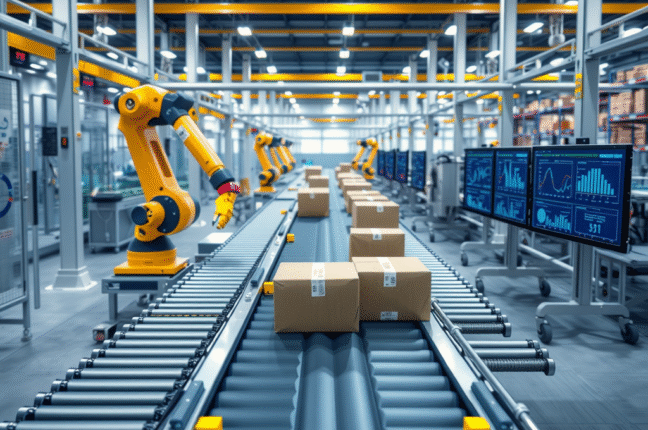
In today’s fast-paced manufacturing and logistics environments, the efficiency of material handling is paramount. Conveyor systems are integral to this process, providing solutions that enhance workflow and reduce operational costs. As technology continues to evolve, the conveyor industry has experienced significant advancements that improve reliability, flexibility, and safety. This article explores the top five innovations in conveyor technology that every industry professional should be aware of.
1. Smart Conveyors with IoT Integration
The rise of the Internet of Things (IoT) has revolutionised the way conveyor systems operate. Smart conveyors equipped with IoT sensors can monitor various parameters such as speed, load, and energy consumption in real-time. This level of connectivity allows for predictive maintenance, reducing downtime and optimising the performance of conveyor systems. For instance, if a sensor detects an anomaly, it can automatically alert maintenance personnel before a system failure occurs. This proactive approach not only enhances reliability but also contributes to a more sustainable operational model by minimising energy waste and material loss.
2. Modular Conveyor Systems
Modular conveyor systems are gaining popularity due to their adaptability and ease of installation. Constructed from standardised components, these systems can be easily reconfigured to accommodate changing production needs or facility layouts. This flexibility is particularly beneficial for businesses that encounter seasonal demand fluctuations or those that are expanding. With modular conveyors, companies can scale their operations quickly without the need for extensive downtime or a complete system overhaul. Furthermore, the design allows for seamless integration with existing machinery, fostering a smoother transition and minimising disruption to productivity.
3. Advanced Materials for Conveyor Belts
Recent advancements in conveyor belt materials have led to the development of belts that are stronger, more durable, and more resistant to wear and tear. Innovative materials such as thermoplastics and composite fabrics are now being employed, enhancing the longevity of conveyor belts even in harsh environments. These materials also allow for lightweight designs that can decrease energy consumption during operation. Additionally, specialised coatings can be applied to belts to improve friction, reduce slippage, and extend lifespan. As a result, companies can experience decreased maintenance costs and increased efficiency over the lifespan of their conveyor systems.
4. Automation and Robotics Integration
As automation becomes increasingly prevalent across industries, the integration of robotics with conveyor systems has emerged as a transformative innovation. Robotic arms paired with conveyor systems can streamline order fulfilment procedures, from picking and packing to sorting and loading. This automation reduces the need for manual labour, resulting in faster processing speeds and the minimisation of human error. Furthermore, advances in artificial intelligence (AI) enable these robotic systems to adapt to varying product sizes and weights, intelligently adjusting their operations to maximise throughput. The synergy between robotics and conveyor technology is beginning to redefine supply chain efficiency.
5. Enhanced Safety Features
Safety remains a top priority in any conveyor operation. Recent innovations in conveyor technology have introduced enhanced safety features designed to protect both workers and machinery. For example, emergency stop buttons and safety light curtains create multiple layers of protection for employees working near conveyor systems. Advanced sensors can detect obstructions and automatically halt operation to prevent accidents. Additionally, conveyor systems can be equipped with systems that promote ergonomic best practices, reducing the risk of workplace injuries associated with manual handling. As awareness of workplace safety grows, these innovations play a crucial role in fostering a safer working environment.
By keeping abreast of these advancements in conveyor technology, businesses can enhance their operational efficiency, reduce costs, and improve safety standards within their facilities. The future of conveyor systems is bright, with continuous innovation paving the way for smarter, more efficient solutions that meet the demands of modern industry. Embracing these technologies is not just an option; it is a necessity for companies aiming to maintain a competitive edge in an increasingly demanding marketplace.
Conveyors are essential in modern manufacturing and logistics, streamlining the movement of goods and materials. By using a conveyor, businesses can increase efficiency and reduce labor costs, ensuring smoother operations. Different types of conveyors cater to various industries, from food processing to automotive assembly. Investing in the right conveyor system can enhance productivity and improve safety by minimizing manual handling and the risk of workplace accidents.
A conveyor system is essential for efficient material handling in various industries. By streamlining the movement of goods, it reduces manual labor and enhances productivity. For businesses looking to upgrade their equipment, exploring options at https://conveyorrollers.co.uk can provide valuable insights into the latest conveyor technology. With the right conveyor solution, companies can optimize their operations, minimize downtime, and ultimately achieve greater efficiency in their supply chain processes.
About the author /
Sylvia Reid