
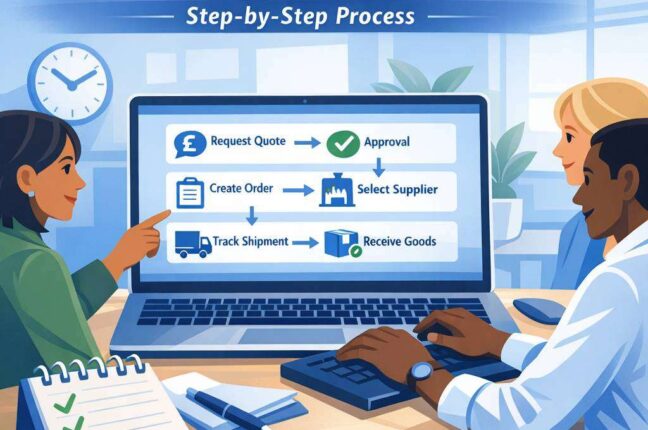
In today’s dynamic business environment, efficient purchasing processes are a competitive differentiator. An electronic purchase order system helps organisations streamline procurement, reduce maverick spend, and improve supplier relationships. This guide outlines a step-by-step process to implement and optimise an online purchase order workflow, drawing on best practices from modern po system software and purchase order management software.
Understanding the foundations: what a po system software delivers
A robust po system for small business or larger organisations provides more than just digital forms. It integrates procurement with finance, inventory, and supplier data to deliver real-time visibility and control. Key capabilities include:
- End-to-end purchase order lifecycle management
- Automated purchase order creation from requisitions
- Approval workflows aligned with organisational policy
- Budget checks and spend analytics
- Supplier catalogue and electronic invoicing integration
- Audit trails and compliance reporting
By selecting a purchase order system uk-based or globally, organisations ensure local regulatory alignment, currency handling, and supplier network access that fits regional procurement needs.
Step 1: Map your current process and define objectives
Before jumping into software, clearly map the existing purchase order process:
- Who can initiate a purchase request?
- What approvals are required, and at what thresholds?
- How are supplier selections made, and how are contracts managed?
- Where does the workflow break down (delays, duplicated data, misaligned budgets)?
Define measurable objectives such as reducing purchase cycle time by 30%, increasing on-time supplier delivery, or cutting maverick purchasing. Establish a baseline so you can quantify improvements after implementing the electronic purchase order system.
Online purchase orders streamline procurement from initiation to approval, increasing efficiency and accuracy in every transaction. Businesses benefit from faster processing, real-time tracking, and reduced manual errors. For a deeper understanding of purchase order concepts and management practices, see this resource in the second half: https://www.gep.com/knowledge-bank/glossary/what-is-purchase-order-management.
Step 2: Choose the right po system software
Selecting the right purchase orders software is critical. Consider these criteria:
- Compatibility: Ensure the purchase order system uk or global version integrates with your existing ERP, accounting software, and inventory management tools.
- Workflow configurability: Your organisation will benefit from approval routing rules, multi-tier sign-offs, and policy-based controls tailored to departments or cost centres.
- Supplier enablement: Look for portals that allow suppliers to receive POs, submit acknowledgements, and send invoices electronically.
- Reporting and analytics: Dashboards for spend analytics, supplier performance, and budget vs. actuals drive continuous improvement.
- Security and compliance: Robust access controls, audit trails, and data protection features are essential.
- Implementation approach: Some organisations prefer cloud-based solutions for rapid deployment, while others require on-premise deployment for data sovereignty.
A cloud-based electronic purchase order system or a purchase ordering software with strong service level agreements often delivers faster time-to-value for small businesses and growing teams.
Step 3: Design a streamlined requisition-to-PO flow
Create a clear, repeatable flow from requisition to PO:
- Requisition initiation: Define who can raise a requisition, what data is required (item, quantity, spec, delivery date, cost centre).
- Approval routing: Implement policies that reflect spend thresholds, supplier risk, and contract compliance. Automate escalation for overdue approvals.
- PO creation: Convert approved requisitions into POs automatically, with item details, pricing, delivery terms, and supplier information.
- PO transmission: Send POs electronically to suppliers via preferred channels (email, portal, or API integration) to ensure fast receipt and acknowledgement.
- Change management: Establish rules for PO changes, including substitutions, quantity adjustments, or delivery date changes, with proper authorisation.
- Receiving and matching: Align with goods receipts and supplier invoices to enable three-way matching in the po system software.
This level of standardisation reduces manual data entry, minimises errors, and accelerates cycle times.
Step 4: Configure approval workflows and controls
Effective approval workflows are the backbone of purchasing efficiency. Consider:
- Threshold-based routing: Smaller purchases can be auto-approved; larger ones route to procurement managers or executives.
- Role-based access: Ensure users have appropriate permissions; separate buying, approving, and receiving duties to reduce risk.
- Policy checks: The system should flag non-compliant items (non-contracted SKUs, out-of-policy vendors) for human review.
- Parallel approvals: When speed is essential, parallel sign-offs can shorten the process while maintaining control.
- Auditable trails: Every action should be recorded with timestamps and user IDs for compliance and forensic analysis.
A well-configured po system software reduces bottlenecks and ensures timely processing, even as your organisation scales.
Step 5: Engage suppliers and implement e-invoicing
A successful electronic purchase order system depends on supplier participation. Steps to engage suppliers include:
- Supplier onboarding: Provide clear guides on how to receive POs, acknowledge them, and submit invoices electronically.
- Data standardisation: Ensure consistent item descriptions, unit measures, and pricing to prevent discrepancies.
- Payment terms alignment: Communicate invoice and payment terms clearly to avoid late payments or disputes.
- Support channels: Offer dedicated support for suppliers adopting the new system.
Electronic invoicing and automated matching reduce cycle times and improve cash flow management. If you operate within a specific market such as the UK, ensure your supplier-facing processes align with local best practices and regulatory requirements.
Step 6: Monitor, analyse, and optimise
Ongoing improvement is essential. Leverage the analytics capabilities of your purchase order management software to:
- Track cycle times for each stage of the requisition-to-PO process
- Monitor supplier performance metrics such as on-time delivery and quality
- Identify maverick purchasing and enforce policy compliance
- Evaluate budget adherence and forecast accuracy
- Detect duplicate or erroneous POs and prevent duplication
Regular reviews help you refine workflow rules, supplier panels, and catalogues, driving continuous efficiency gains.
Step 7: Plan for scalability and change management
As your organisation grows, your po system software should scale. Prepare for change with:
- Phased rollouts by department or business unit
- Training programmes that cover core functionality and common exceptions
- Clear documentation of processes, policies, and escalation paths
- A feedback loop to capture user experiences and translate them into system enhancements
A well-executed roll-out minimises resistance and accelerates the realisation of benefits from online purchase ordering.
Step 8: Align with governance and compliance
Procurement governance ensures consistency and risk mitigation. Implement:
- Segregation of duties between requisitioning, approving, purchasing, and receiving
- Approval thresholds aligned to budget governance
- Data retention and audit reporting standards
- Vendor risk management, including due diligence and performance reviews
A compliant, well-governed po system provides confidence to stakeholders and simplifies audits.
Adopting an electronic purchase order system is a strategic decision that can transform procurement efficiency. By selecting appropriate po system software, designing a clear requisition-to-PO flow, engaging suppliers, and continuously refining the process through data insights, organisations can realise faster cycle times, improved supplier collaboration, and stronger spend control. Whether you are exploring a po system software for a small business or a larger enterprise, the principles remain the same: standardise, automate, and optimise.
Increase efficiency with streamlined online purchase orders for your business. Explore seamless ordering workflows at cloudb2b.co.uk and transform how you manage procurement. Our cloud-based system speeds approvals, reduces errors, and improves supplier collaboration.
About the author /
Sylvia Reid